Are you ready to transform your room with the perfect curtains? Before you rush to buy, there’s one crucial step you can’t skip: measuring your windows correctly.
Getting the right size means your curtains will look amazing, hang just right, and keep out the light or heat as you want. Don’t worry—it’s easier than you think. In this guide, you’ll learn simple, clear steps to measure your windows like a pro.
Keep reading, and soon you’ll have curtains that fit perfectly and make your space feel complete.
Choosing Curtain Style
Choosing the right curtain style is important before measuring your window. Different styles change how much fabric you need and how the curtains hang. Knowing these styles helps you get accurate measurements. It also makes your room look better.
Think about the look and function you want. Some styles block light well. Others let light in but add privacy. Your choice affects curtain width and length.
Types Of Curtains
Curtains come in many styles. Rod pocket curtains slide onto the rod. They need less fabric but create soft folds.
Grommet curtains have metal rings. They hang straight and need more width for full coverage. Tab top curtains are easy to hang and have loops on top.
Pinch pleat curtains have sewn pleats for a formal look. They require extra fabric for the pleats and fullness.
Impact On Measurements
The curtain style changes how you measure width. For example, pinch pleat curtains need 1.5 to 3 times the window width for fullness.
Length also varies. Some curtains hang just below the window sill. Others reach the floor or puddle slightly. Decide this before measuring.
Mounting style matters too. Inside mount curtains fit inside the window frame. Outside mount curtains cover the frame and add extra width and length.
Tools Needed
Measuring curtains starts with having the right tools. These tools help you get accurate measurements. Accurate measurements ensure your curtains fit perfectly. Without the right tools, you might make mistakes that cost time and money.
Measuring Tape
A measuring tape is the most important tool for measuring curtains. Use a flexible tape that can bend around corners. Choose a tape with clear, easy-to-read numbers. This tool helps you measure width and height precisely. Make sure the tape is long enough for your window size.
Ladder And Pencil
A ladder helps you reach higher parts of the window. This is important for tall windows or curtain rods. Use a sturdy ladder for safety. A pencil lets you mark measurements on the wall or window frame. Marking helps you keep track of exact points. Use light marks that you can erase later.
Measuring Window Width
Measuring the width of your window is the first step to choosing the right curtains. Accurate width helps curtains fit well and look good. It also ensures curtains cover the window properly and block light effectively.
Take your time to get the right measurement. Use a steel tape measure for best results. Write down your measurements clearly to avoid mistakes later.
Include Window Frame
Measure the full width of the window frame, not just the glass. The frame holds the curtain rod, so it matters for curtain size. Stretch the tape from one outer edge of the frame to the other. This gives you the total width to cover.
Do not guess or round the numbers. Exact width helps pick the correct curtain rod and curtain panel size. Measure twice for accuracy.
Allow For Curtain Fullness
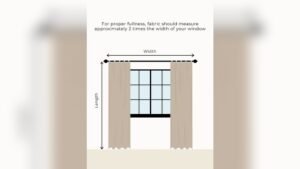
Curtains look better with some fullness or extra fabric. Add 1.5 to 3 times the window width for fullness. This means the curtain fabric will be wider than the window.
Fullness creates soft folds and a richer look. It also helps block light better and offers more privacy. Choose fullness based on curtain style and fabric thickness.

Credit: twopagescurtains.com
Measuring Window Height
Measuring the height of your window is key to choosing the right curtain size. The height affects how your curtains hang and look. Proper measurement helps avoid curtains that are too short or too long.
From Rod To Floor
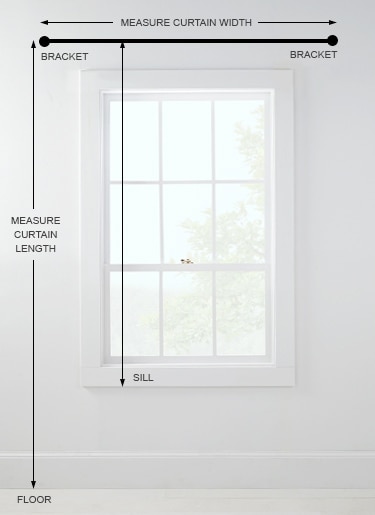
Start by measuring from the curtain rod to the floor. Use a tape measure and keep it straight. This length shows how long your curtains will be.
Measure on both sides and in the middle. Sometimes floors are not even. Take the longest measurement for the best fit.
Adjusting For Curtain Length
Decide where your curtains should end. They can just touch the floor, hover slightly above, or pool a bit on the floor.
For a clean look, subtract 1 to 2 inches from the rod-to-floor length. For a flowing, elegant style, add 4 to 6 inches.
Write down the final number. This will guide you in buying or making curtains that fit perfectly.
Selecting Curtain Rod Placement
Choosing where to place your curtain rod affects how curtains look and work. Proper placement helps curtains hang well and lets in the right light. It also makes your window appear bigger or taller.
Measure carefully before installing the rod. This step ensures your curtains fit perfectly and move smoothly.
Height Above Window
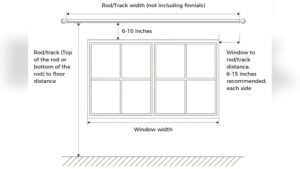
Mount the curtain rod higher than the window frame. Aim for 4 to 6 inches above the frame. This makes the window seem taller and the room airier.
Mounting too low can make the space feel cramped. Keep enough space so curtains do not block light when open.
Rod Extension
Extend the rod beyond the window sides. Add 3 to 6 inches on each side. This allows curtains to fully cover the window when closed.
Extra width also lets curtains stack neatly when open. Avoid blocking the view or light with the curtain fabric.
Calculating Fabric Requirements
Calculating fabric requirements is a key step when measuring curtains for a window. It helps you buy the right amount of material. This prevents waste and ensures your curtains look perfect.
Measure the width and height of the window first. Then think about how full you want the curtains. The fullness affects how much fabric you need. More fullness means more fabric and a richer look.
Adding Seam Allowance
Seam allowance is extra fabric added for sewing edges. Add about 1 to 2 inches on each side. This gives room to stitch without losing size. Also, include extra length at the top and bottom. This helps with hems and curtain rods.
Considering Pattern Repeat
Pattern repeat means the design repeats on the fabric. Check the size of the repeat before buying. You may need extra fabric to match the pattern across panels. This keeps the curtains looking neat and uniform.
Common Measurement Mistakes
Measuring curtains for a window can be tricky. Many people make simple mistakes that lead to curtains that do not fit well. These errors can cause frustration and extra costs. Knowing the common measurement mistakes helps you avoid these problems. It saves time and money.
Ignoring Curtain Style
Different curtain styles need different measurements. For example, a rod pocket curtain hangs differently than a grommet curtain. Not considering the style can make curtains too short or too long. Measure with the curtain style in mind. This ensures the curtains look good and work properly.
Not Double Checking Measurements
Measuring once is not enough. Mistakes happen easily. A small error can make a big difference in curtain size. Always measure twice or even three times. Check both width and height carefully. Double checking helps catch errors before buying or cutting fabric. It gives confidence your curtains will fit perfectly.
Credit: www.vermontcountrystore.com
Tips For A Perfect Fit
Getting the right fit for your curtains makes your room look neat and stylish. A perfect fit helps block light well and keeps your windows clean. Follow simple tips to measure your windows carefully. This saves time and avoids mistakes.
Small errors can change how your curtains hang and work. Use these tips for the best results. They make your curtains look great and last longer.
Measure Twice
Always measure your window two times. This helps catch any mistakes early. Use a metal tape measure for accuracy. Measure the width and height of your window frame. Write down each number clearly. Check your notes before buying curtains.
Consult Professionals
Ask experts for help if unsure about measurements. They can offer advice on the best curtain size. Professionals know how to handle tricky window shapes. Many stores provide measuring services. Getting advice saves money and avoids returns.

Credit: www.aprilnotes.com
Frequently Asked Questions
How Do I Measure Curtain Width For A Window?
Measure the window’s width first. Add 4 to 8 inches on each side. This ensures proper coverage and fullness.
What Is The Best Curtain Length For Windows?
Curtain length depends on style. For a classic look, measure from the rod to the floor. Add 1 inch for clearance.
How To Measure For Curtain Rods?
Measure the window width. Add extra 6 to 12 inches for rod length. This allows curtains to open fully.
Should I Measure Curtains With Or Without Window Trim?
Measure from the outer edge of the trim. This ensures curtains cover the entire window area.
Conclusion
Measuring curtains for your window does not have to be hard. Use a tape measure and write down the width and height. Add a few extra inches for fullness and proper coverage. Remember to measure twice to avoid mistakes. Choose the right curtain size for your style and needs.
Proper measurements help your curtains fit well and look great. Take your time and enjoy the process. Your window will look better with well-measured curtains. Simple steps bring great results.
As an Amazon Associate, I earn from qualifying purchases.