
Are you dreaming of a stylish and practical way to organize your books and display your favorite items? Building built-in bookshelves could be the perfect solution for your home.
Imagine having custom shelves that fit perfectly into your space, adding charm and increasing your home’s value. In this guide, you’ll discover simple steps to create your own built-in bookshelves—even if you’re new to DIY projects. Keep reading, and by the end, you’ll have the confidence and know-how to transform any room with beautiful, sturdy shelves designed just for you.
Planning Your Bookshelves
Planning your built-in bookshelves is the first step to success. It helps you avoid mistakes and saves time. Careful planning makes the project easier and the shelves better. Think about how you want to use the shelves and what style fits your room.
Focus on details like size, location, and materials. These choices affect the final look and function. Prepare well to create shelves that last and look great.
Choosing The Right Location
Pick a spot with enough wall space. Avoid places with doors or windows in the way. Check if the wall is strong enough to hold shelves and books. A quiet corner or living room wall works well. Think about lighting too. Good light helps show off your books and decor.
Measuring Your Space
Measure the wall height and width carefully. Write down the numbers. Measure twice to be sure. Check the depth you want for the shelves. Leave some space on each side for trims or panels. Accurate measurements help build shelves that fit perfectly.
Selecting Materials And Tools
Choose wood that fits your budget and style. Pine is cheap and easy to work with. Hardwood looks nicer but costs more. Buy screws, nails, and brackets for strong support. Get tools like a saw, drill, level, and measuring tape. Good tools make building faster and safer.

Credit: southernyankeediy.com
Designing Your Shelves
Designing your built-in bookshelves is the first step to a perfect project. Good design ensures your shelves fit the space and suit your needs. Think about what you want to store and how much space you have. This part shapes the look and function of your shelves.
Deciding Shelf Dimensions
Measure the wall space carefully. Decide the height, width, and depth of each shelf. Make sure the shelves fit the books or items you plan to store. Standard shelves are usually 10 to 12 inches deep. Adjust depth for larger books or decorations.
Incorporating Storage Features
Think about adding closed cabinets or drawers. These help hide clutter and keep things organized. Open shelves work well for books and display items. Mix open and closed storage for a balanced look. Consider adjustable shelves for flexibility.
Picking A Style
Choose a style that matches your room’s decor. Simple, clean lines suit modern spaces. Classic designs with molding fit traditional rooms. Paint or stain your shelves to match furniture. Style affects how your shelves blend with the room.
Preparing The Area
Preparing the area is the first step to building built-in bookshelves. This step sets a strong base for the entire project. A clean, protected, and well-marked space helps you work faster and avoid mistakes. Take time to get everything ready before you start cutting or assembling.
Clearing The Space
Remove all furniture and items from the work area. Clear the floor and walls where the shelves will go. A tidy space reduces accidents and gives you room to move. Keep tools and materials close but organized.
Protecting Floors And Walls
Cover floors with drop cloths or plastic sheets. Use painter’s tape to protect walls from scratches or paint. This step saves time on cleaning later. It also keeps your home safe from damage during construction.
Marking Layouts
Use a pencil and measuring tape to mark shelf positions on the wall. Draw lines where the shelves will be fixed. Check measurements twice for accuracy. Clear markings guide you during installation and keep shelves straight.
Building The Frame
Building the frame is the first step in creating sturdy built-in bookshelves. This part forms the base and structure. A strong frame ensures the shelves will hold weight and last long.
Take your time to measure and cut carefully. A well-built frame makes assembly easier and the finished shelves look professional.
Cutting Lumber Pieces
Start by selecting quality lumber like pine or plywood. Measure twice and cut once. Cut the vertical sides, top, bottom, and shelves to size. Use a saw that suits your skill level. Smooth the edges with sandpaper. This prevents splinters and gives a clean finish.
Assembling The Frame
Lay the cut pieces flat on a workspace. Attach the top and bottom pieces to the sides. Use wood glue for extra strength. Then, nail or screw the pieces together. Check that corners are square with a carpenter’s square. Add support braces if needed to keep the frame sturdy.
Securing To Wall Studs
Locate the wall studs using a stud finder. Mark the stud positions on the frame. Align the frame with the wall and drill pilot holes. Secure the frame to the studs with long screws. This holds the shelves firmly and prevents tipping. Double-check the frame is level before final tightening.
Installing Shelves
Installing shelves is a key step in building built-in bookshelves. It gives structure and function to your project. Proper shelf installation ensures your bookshelves hold weight safely. Follow simple steps to install shelves correctly. This helps your shelves last longer and look great.
Adding Support Brackets
Support brackets hold the shelves firmly in place. Choose sturdy brackets that fit your shelf size. Mark bracket positions on the bookshelf frame. Use a level to keep brackets straight. Attach brackets with screws into wall studs or solid wood. Secure brackets tightly to avoid wobbling.
Placing And Securing Shelves
After brackets are ready, place the shelves on them. Check shelf alignment and adjust if needed. Use screws or nails to secure shelves to brackets. This stops shelves from shifting or tipping. Make sure shelves sit flat and stable on brackets.
Adjusting Shelf Heights
Adjust shelf height to fit your books and items. Measure space needed for taller or shorter objects. Move brackets up or down to change shelf height. Recheck levels after moving brackets. Customized shelf height makes your built-in shelves more useful.
Finishing Touches
Finishing touches give your built-in bookshelves a polished, professional look. This step is important for both beauty and durability. Careful finishing makes your shelves last longer and fit your room’s style. Follow these simple steps to complete your project well.
Sanding And Smoothing
Start by sanding all surfaces with fine-grit sandpaper. Smooth edges and corners to remove rough spots. Sanding helps paint or stain stick better. Use a sanding block for flat areas and hand sand curves. Wipe off dust with a clean cloth before moving on.
Painting Or Staining
Choose paint or stain that matches your room’s decor. Paint gives a solid color and covers wood grain. Stain highlights natural wood patterns and adds warmth. Apply thin, even coats with a brush or cloth. Let each coat dry fully before adding another.
Adding Trim And Molding
Trim and molding create a finished, custom look. Attach crown molding at the top for elegance. Use baseboard trim at the bottom to hide gaps. Nail trim pieces carefully and fill holes with wood filler. Sand lightly and touch up paint or stain as needed.
Maintaining Your Bookshelves
Maintaining your built-in bookshelves keeps them looking fresh and sturdy. Regular care helps avoid damage and extends their life. Simple steps can make a big difference in keeping shelves neat and functional.
Cleaning Tips
Dust shelves often with a soft cloth or duster. Use a damp cloth for sticky spots, but avoid soaking the wood. Clean corners and edges carefully to remove dirt. Avoid harsh cleaners that can damage the finish. Dry shelves well after cleaning to prevent moisture damage.
Repairing Minor Damages
Fix small scratches with wood filler or a matching marker. Tighten loose screws and brackets to keep shelves stable. Sand rough areas gently before applying touch-up paint or stain. Check shelves for cracks and repair them early. Small repairs prevent bigger problems later on.
Updating Shelf Design
Change shelf height to fit new books or items. Add decorative trim or molding for a fresh look. Paint or stain shelves to match room style. Use wallpaper or fabric on the back panel for color. Simple updates can refresh your space without rebuilding shelves.

Credit: southernyankeediy.com
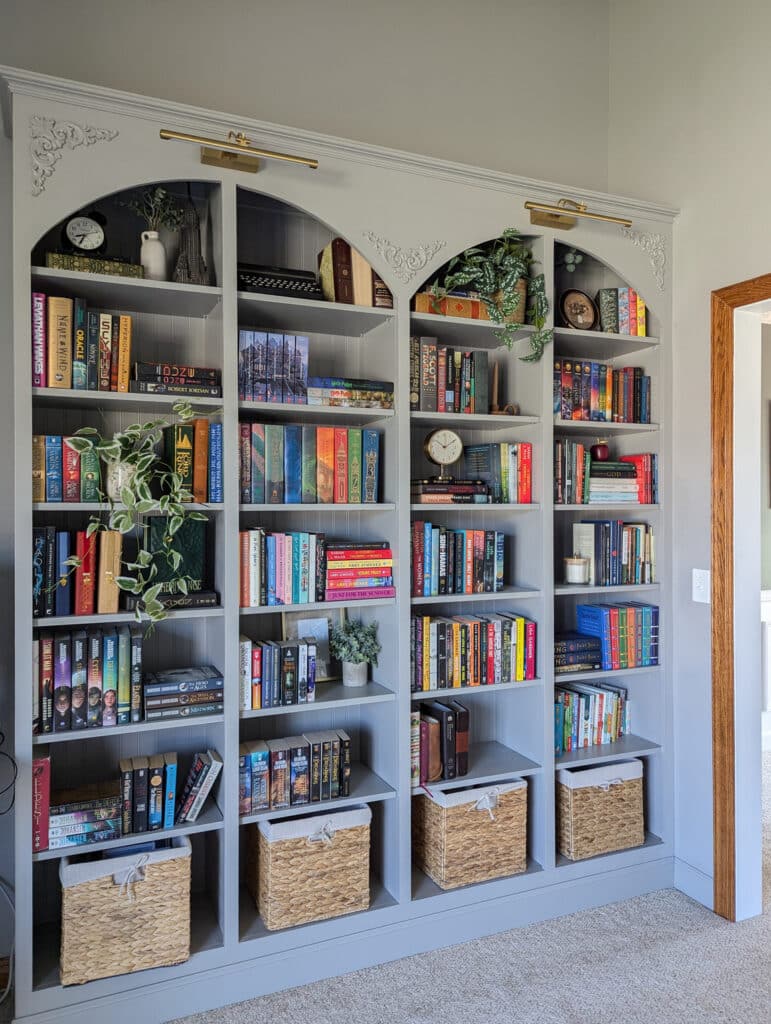
Credit: gagemadehome.com
Frequently Asked Questions
What Tools Are Needed To Build Built-in Bookshelves?
You need a saw, drill, level, measuring tape, screws, wood glue, and clamps. These tools ensure precise cuts, secure assembly, and a professional finish.
How Do I Measure Space For Built-in Bookshelves?
Measure the width, height, and depth of the wall space. Account for baseboards and molding to fit shelves perfectly.
What Type Of Wood Is Best For Built-in Bookshelves?
Pine, oak, and maple are popular choices. They are durable, easy to work with, and provide a smooth finish.
How Can I Secure Built-in Bookshelves To The Wall?
Use wall studs and heavy-duty screws for stability. Anchoring ensures shelves support heavy books safely.
Conclusion
Building built-in bookshelves adds charm and storage to any room. Start with clear plans and measure carefully for a perfect fit. Use quality wood and tools to ensure durability and a neat look. Take your time with each step to avoid mistakes.
Personalize shelves to match your style and needs. Enjoy the pride of creating something useful and beautiful yourself. These shelves will hold books and memories for years. Simple, practical, and lasting—built-in bookshelves make a great home addition.
As an Amazon Associate, I earn from qualifying purchases.