Are you struggling to figure out where to place your area rug in the living room? You’re not alone.
The right rug can completely change the look and feel of your space, making it cozy, stylish, and inviting. But if it’s placed wrong, it can throw off the entire room’s balance. You’ll discover simple, practical tips to position your area rug perfectly.
By the end, you’ll know exactly how to make your living room look polished and comfortable, without any guesswork. Keep reading to unlock the secrets of area rug placement that will transform your home.
Choosing The Right Rug Size
Choosing the right rug size is very important for your living room. A rug that fits well can make the space look bigger and more inviting. It also helps tie the furniture together and adds comfort underfoot. Too small or too big rugs can make the room feel off-balance. Understanding how to pick the right size will help you find the perfect rug for your space.
Measure Your Living Room Space
Start by measuring the length and width of your living room. Use a tape measure and write down the numbers. Think about where you want to place the rug. Leave some space around the edges for better balance. Knowing your room size helps you avoid rugs that are too small or large.
Consider Furniture Arrangement
Look at your furniture layout before choosing a rug size. Rugs can fit under all furniture or just some pieces. For example, a large rug can go under the sofa and chairs. A smaller rug might only fit in front of the couch. Decide how much of your furniture you want on the rug for a cozy look.
Standard Rug Sizes Explained
Rugs come in common sizes like 5×8, 8×10, and 9×12 feet. A 5×8 rug works well in small spaces or under a coffee table. An 8×10 rug fits most average living rooms and holds larger furniture groups. A 9×12 rug suits big rooms and covers more floor space. Choose a size that fits your room and furniture well.
Selecting Rug Shapes And Styles
Selecting the right rug shapes and styles helps define your living room’s look. The rug sets the room’s tone and feels. It ties furniture and colors together. Choosing the right shape and style makes your space cozy and balanced.
Think about your room’s size and furniture layout. The rug should fit well without crowding. Style and pattern should match your decor for a smooth flow. Texture and material add comfort and durability. Consider these points before buying your rug.
Common Rug Shapes For Living Rooms
Rectangular rugs are the most popular choice. They fit well under sofas and coffee tables. Round rugs create a soft, inviting look. They work well in small seating areas or under round tables. Square rugs suit square rooms or groupings of furniture. Oval rugs blend the benefits of rectangles and circles.
Matching Rug Patterns With Decor
Choose patterns that match your room’s style. Simple patterns suit modern or minimalist rooms. Bold patterns add energy to plain spaces. Floral or traditional patterns work with classic decor. Keep colors in the rug close to your walls and furniture. This keeps the room looking calm and coordinated.
Material And Texture Choices
Wool rugs are soft and durable, good for busy rooms. Cotton rugs are easy to clean and light. Synthetic rugs resist stains and wear well. Natural fibers like jute add a rustic feel. Consider the rug’s texture; smooth rugs feel sleek. Thick, fluffy rugs add warmth and comfort underfoot.
Placement Techniques For Rugs
Choosing the right spot for your area rug changes the whole living room look. Placement techniques help you fit the rug with your furniture and space. The right rug placement makes your room feel cozy and balanced. Use these simple ideas to place your rug perfectly.
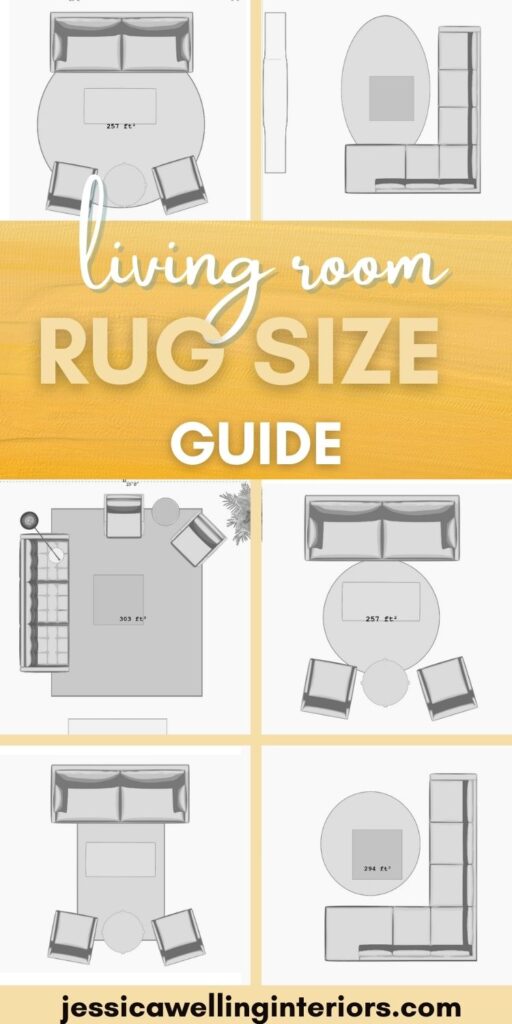
Rug Placement With Sofa And Chairs
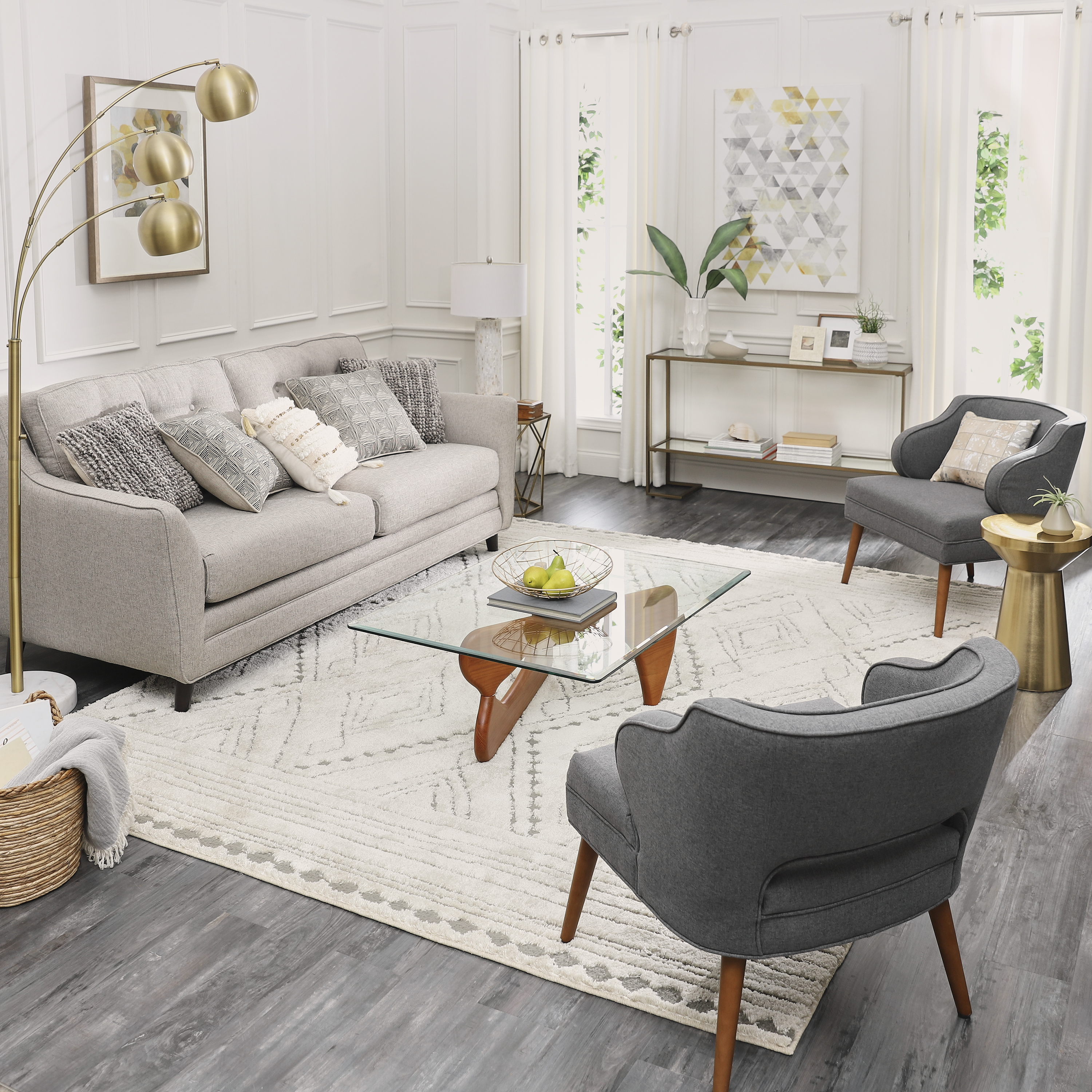
Place the rug so the front legs of the sofa and chairs rest on it. This anchors the seating area and ties everything together. Keep the rug large enough to fit all main furniture. It makes the space look connected and inviting.
Floating Rug Style
Use a smaller rug that sits fully under the coffee table. Leave some space between the rug and furniture legs. This style works well in small rooms or open spaces. It creates a light, airy feel without overwhelming the room.
Layering Rugs For Depth
Place a smaller rug on top of a larger, neutral rug. This adds texture and color without clutter. Layering creates a cozy, rich look. It works well with simple sofas or plain floors.
Credit: jessicawellinginteriors.com
Color Coordination Tips
Choosing the right colors for your area rug can change the whole look of your living room. Color coordination helps create balance and makes the space feel inviting. The rug should fit with the colors of your walls and furniture. It can also add a pop of color or soften the room’s style. Understanding color coordination makes placing your rug easier and more effective.
Using Rugs To Anchor The Room
Rugs can anchor the room by tying all the elements together. Pick a rug color that matches some parts of the room. This helps the space look connected and neat. A well-chosen rug stops the room from feeling empty or floating. It grounds the furniture and defines seating areas clearly.
Combining Rug Colors With Wall And Furniture
Match your rug colors with your walls and furniture to create a smooth flow. Use similar shades or tones to keep things calm and unified. You can repeat colors from cushions or curtains in the rug. This creates a balanced look that feels comfortable and planned.
Creating Contrast And Harmony
A rug can add contrast by using colors that stand out against walls and furniture. This makes the rug a focal point and adds interest. At the same time, balance bright colors with neutral tones to keep harmony. Contrast and harmony together make the room lively but not chaotic.
Maintaining And Caring For Area Rugs
Maintaining and caring for area rugs keeps them looking fresh and lasting longer. Proper care protects the rug’s colors and fibers. It also helps keep your living room neat and cozy. Simple habits can make a big difference in your rug’s life.
Cleaning Routine
Vacuum your rug regularly to remove dirt and dust. Use a vacuum without a beater bar for delicate rugs. Spot clean spills immediately with a clean cloth and mild soap. Avoid harsh chemicals that can damage fibers. Rotate the rug every few months to even out wear.
Preventing Wear And Tear
Place furniture carefully to avoid heavy pressure on one spot. Use furniture pads under legs to reduce damage. Keep pets’ nails trimmed to prevent snags. Avoid direct sunlight to prevent fading. Limit heavy foot traffic in one area to reduce wear.
Rug Pads And Their Benefits
Rug pads add cushioning under the rug for comfort. They prevent slipping and keep the rug in place. Pads protect the floor from scratches and dents. They also extend the rug’s life by reducing friction. Choose a pad that fits your rug size and type.
Credit: www.mohawkhome.com
:max_bytes(150000):strip_icc()/AmyCooper-MarcellaAlanAfter1-5bef478326874b728b526bac19649802.jpg)
Credit: www.thespruce.com
Frequently Asked Questions
How Do I Choose The Right Size Rug For My Living Room?
Select a rug size that fits your furniture arrangement. Ideally, the rug should be large enough to anchor the seating area. Leave at least 18-24 inches of floor space around the rug edges for balance and flow in the room.
Should The Rug Go Under All The Furniture?
Not necessarily. For a cohesive look, place the front legs of sofas and chairs on the rug. This anchors the furniture while keeping the room spacious. Avoid placing the entire furniture set fully on the rug unless it’s very large.
Where Should I Position The Rug In The Living Room?
Center the rug under the main seating area. Align it so sofas and chairs partially rest on the rug. Ensure the rug complements the room’s layout, creating a cozy and inviting space without obstructing walkways.
Can I Use A Rug To Define Different Zones In My Living Room?
Yes, rugs effectively define separate zones in open-plan living rooms. Use distinct rugs to mark seating, dining, or reading areas. This adds structure and style while enhancing the room’s functionality and flow.
Conclusion
Placing an area rug can change your living room’s look and feel. Choose the right size and shape for your space. Position it so furniture legs rest on or near the rug edges. Keep pathways clear to avoid tripping. Rugs add warmth and comfort underfoot.
They also help define seating areas nicely. Try different layouts until the room feels balanced. Small changes make a big difference in style and comfort. Enjoy your cozy, stylish living room with the perfect rug placement.
As an Amazon Associate, I earn from qualifying purchases.