Are you ready to give your windows a fresh new look but unsure how to measure curtains the right way? Getting the measurements just right can make all the difference between curtains that fit perfectly and those that fall short or look awkward.
In this guide, you’ll learn simple, step-by-step methods to measure your windows like a pro. By the end, you’ll feel confident choosing curtains that enhance your space and bring your style to life. Keep reading—your perfect window treatment is closer than you think!
Credit: www.vermontcountrystore.com
Choosing Curtain Style
Choosing the right curtain style is key to making your windows look great. The style affects the room’s feel and how much light comes in. Picking the perfect curtain helps you balance beauty and function. Consider your room’s needs and the window’s shape before deciding.
Think about how the curtains will work with your room’s style and purpose. The right style can make your space cozy or bright. It can also provide privacy or let in natural light. Take time to choose a curtain style that fits your window well.
Types Of Curtains
There are many curtain types to choose from. Sheer curtains let in light while adding softness. Blackout curtains block light for better sleep or privacy. Thermal curtains help keep rooms warm or cool. Patterned curtains add color and style. Plain curtains offer a simple, clean look. Pick the type that fits your room’s needs and style.
Consider Window Function
Think about how you use the window every day. For windows you open often, choose curtains easy to move. For windows in bedrooms, blackout curtains help block light. Living rooms can benefit from curtains that soften sunlight. Kitchens may need curtains that resist moisture and stains. Match curtain style with how the window serves your space.
Tools Needed
Measuring curtains for your windows starts with having the right tools. The correct tools make the process easier and more accurate. This section covers the basic tools needed for measuring curtains.
Measuring Tape
A measuring tape is essential for getting exact window dimensions. Choose a tape that is long enough to cover your window size. Use a metal tape for better durability and accuracy. Hold it straight to avoid errors in measurement. Measure the width and height carefully.
Ladder Or Step Stool
A ladder or step stool helps reach higher windows safely. It gives you a stable platform to measure from the top of the window frame. Make sure it is sturdy and placed on a flat surface. This tool is helpful for tall or hard-to-reach windows.
Measuring Width
Measuring the width of your curtains is a key step to get the right fit. The width affects how your curtains look and how well they cover the window. Accurate measurements help avoid curtains that are too narrow or too wide.
Measuring Window Frame
Start by measuring the width of the window frame. Use a steel tape measure for accuracy. Measure from one inside edge of the frame to the other. Write down this number. This is the basic width you need to cover.
Adding Extra Width
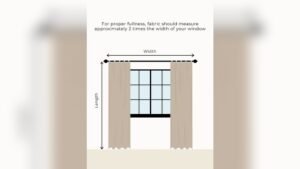
Add extra width to make the curtains fuller. Curtains look best when they have some folds or gathers. Usually, add 1.5 to 2 times the window width. For example, if your window is 40 inches wide, the curtain width should be 60 to 80 inches. This extra width helps block more light and improves privacy.
Measuring Length
Measuring the length of your curtains is a key step to get the perfect fit. The right length makes your room look neat and stylish. It also helps your curtains function well, whether they block light or add privacy.
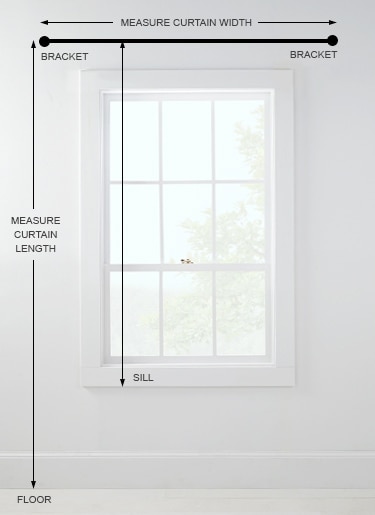
Start by deciding how long you want the curtains to be. Then, measure carefully from the curtain rod down to the spot where the curtain should end. Precise measurement avoids curtains that are too short or drag on the floor.
Deciding Curtain Length
Choose the curtain length based on the room style and window type. Curtains can hang just below the window sill for a casual look. Or, they can reach the floor for a formal, elegant feel.
Some prefer curtains that puddle slightly on the floor for added drama. Others want curtains to stop right at the floor to keep things simple and clean. Think about how the curtains will open and close too.
Measuring From Rod To Desired End
Use a metal tape measure for accuracy. Start measuring from the curtain rod or track. Measure straight down to the point where you want the curtain to end.
Measure twice to avoid mistakes. Note the length in inches or centimeters. If you want curtains to puddle, add extra length. For floor-length curtains, measure to just above the floor.
Selecting Curtain Rod Placement
Selecting the right curtain rod placement is key to a perfect window treatment. It affects both the look and function of your curtains. Proper placement helps your curtains hang well and cover the window properly. This section explains how to choose the right height and width for your curtain rod.
Height Above Window
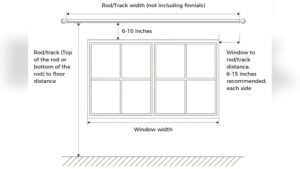
Place the curtain rod higher than the window frame. About 4 to 6 inches above looks best. This makes the window appear taller and the room bigger. Mounting the rod too close to the window can make the space feel cramped. Higher placement also allows curtains to hang freely without blocking light.
Extension Beyond Frame
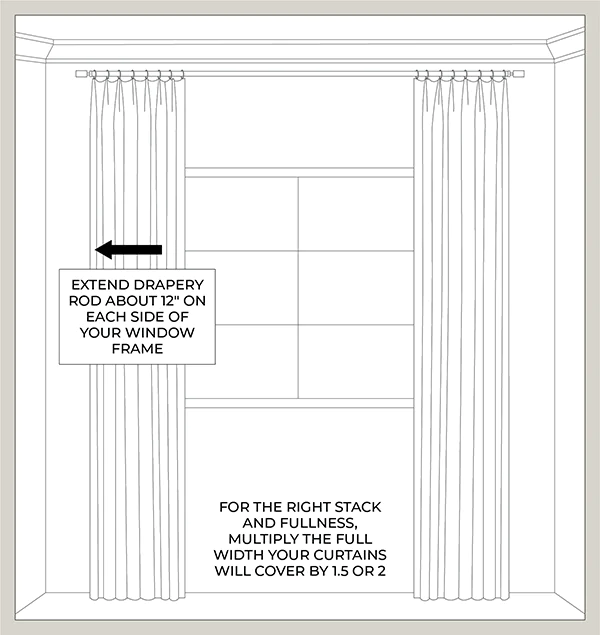
Extend the curtain rod beyond the window frame on each side. Add 3 to 6 inches on both sides for best results. This lets curtains fully cover the window when closed. It also allows the curtains to stack back without blocking the glass. Proper extension improves both privacy and light control.
Credit: www.theshadestore.com
Adjusting For Curtain Header
Adjusting for the curtain header is important when measuring curtains. The header affects how the curtain hangs and how much fabric you need. Different types of headers change the length and look of your curtains. Knowing the header style helps you get the right curtain size.
Types Of Headers
Headers come in many styles. Some common types are pencil pleat, eyelet, and tab top. Pencil pleat headers have tight folds and need extra fabric at the top. Eyelet headers have metal rings that slide on a rod. Tab tops have fabric loops that hold the curtain. Each header style changes how the curtain hangs and how much fabric is needed.
Impact On Curtain Length
The header style changes the curtain length you need. For pencil pleat curtains, add extra length for the folds and top heading tape. Eyelet curtains usually hang from the metal rings, so measure from the rod to the floor. Tab top curtains need length from the top of the loop to the bottom. Always measure carefully to allow for the header style so the curtains hang beautifully.
Common Mistakes To Avoid
Measuring curtains can seem simple, but many make mistakes that cause problems. These mistakes lead to curtains that do not fit well or look awkward. Avoiding common errors saves time and money. It helps you get curtains that hang perfectly and cover your windows properly.
Incorrect Measurements
One common mistake is measuring the window incorrectly. Many measure only the glass area and forget the frame. Curtains need to cover the whole window, including the frame and some extra space. Measuring too small means curtains will look short or narrow. Always use a metal tape measure for accuracy.
Measure the width twice: top and bottom of the window. Use the larger number to avoid tight fits. For length, measure from the curtain rod to where you want the curtain to end. Double-check these numbers before buying fabric or curtains.
Ignoring Fabric Shrinkage
Fabric can shrink after washing or exposure to sunlight. Ignoring this leads to curtains that become too short or tight. Always add extra length and width to your measurements. Add about 5% extra fabric to allow for shrinkage.
Pre-wash the fabric if possible to see how much it shrinks. This step is important for natural fabrics like cotton or linen. Planning for shrinkage ensures your curtains stay the right size for a long time.

Credit: www.aprilnotes.com
Final Tips For Perfect Fit
Getting the perfect fit for your curtains is important to make your windows look great. Small mistakes can cause curtains to hang oddly or not cover the window well. This final section shares simple tips to help you avoid common errors and achieve a neat, tailored look.
Double Check Measurements
Measure your window twice or even three times before buying curtains. Use a metal tape for accuracy. Write down the width and height clearly. Check from edge to edge, including any window trim. This step prevents buying curtains that are too short or narrow. Taking your time here saves money and frustration later.
Allow For Curtain Fullness
Curtains need extra fabric to look full and soft. Multiply your window width by 1.5 to 3 times, depending on the style. This fullness creates gentle folds and blocks light better. Flat curtains can look plain and may not hang properly. Adding fullness also gives a richer, more inviting appearance to your room.
Frequently Asked Questions
How Do I Measure Window Width For Curtains?
Measure the width of your window frame from edge to edge. Add extra inches on both sides for curtain overlap and fullness.
What Curtain Length Should I Choose For Windows?
Measure from the curtain rod to the desired length, usually just below the window sill or to the floor.
Should I Include Curtain Rod Height In Measurements?
Yes, measure from the rod position to get accurate curtain length and ensure proper window coverage.
How Much Extra Width Is Needed For Curtain Fullness?
Add 1. 5 to 3 times the window width to achieve a full, gathered look for your curtains.
Conclusion
Measuring curtains for your window is simple with the right steps. Take accurate width and height measurements. Remember to add extra fabric for fullness and hems. Choose a style that fits your room and window shape. Double-check numbers before buying fabric or curtains.
This careful approach helps you avoid mistakes and get perfect curtains every time. Enjoy a neat and stylish window look with well-measured curtains.
As an Amazon Associate, I earn from qualifying purchases.