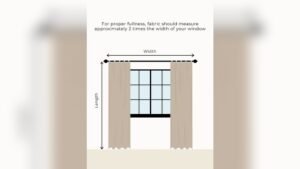
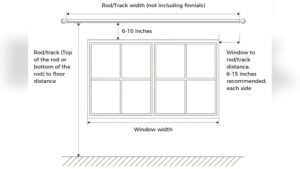
Are you tired of curtains that look too small or too long for your windows? Getting the right curtain size can completely change the look and feel of your room.
But measuring windows and choosing the perfect curtain size can feel confusing. Don’t worry—this guide will show you exactly how to size curtains for your windows, step by step. By the end, you’ll know how to pick curtains that fit beautifully, block light just right, and add style to your space.
Keep reading, and say goodbye to awkward curtain lengths forever!
Measure Your Window
Measuring your window is the first step to choosing the right curtain size. Accurate measurements ensure your curtains fit well and look great. Take your time and measure carefully. Use a metal tape measure for best results. Write down each number as you go.
Width Measurement Tips
Measure the full width of the window frame. Include the frame edges to cover the entire space. Add extra inches for curtain fullness and overlap. Usually, add 4 to 8 inches on each side. This helps curtains block light better and look fuller.
Height Measurement Tips
Measure from the top of the window frame down to the window sill or floor. Decide how long you want your curtains to be. For sill length, measure to the window ledge. For floor length, measure to about half an inch above the floor. For puddling curtains, add extra length to touch the floor softly.
Account For Curtain Rod Placement
Measure where you will place the curtain rod. Usually, rods go 4 to 6 inches above the window frame. Measure the total width including rod brackets. This ensures curtains cover the window fully when closed. Proper rod placement creates a balanced, clean look.
Choose Curtain Style
Choosing the right curtain style is key for proper curtain sizing. Different styles change how much fabric you need. The style also affects how the curtains hang and cover the window. Pick a style that fits your room’s look and your window’s shape.
Consider how the curtain will open and close. Some styles need more fabric to create folds or pleats. Others hang straight and require less material. This choice impacts both size and cost.
Types Of Curtains
There are many curtain types. Rod pocket curtains slide onto the rod through a sewn pocket. They create a soft, gathered look. Grommet curtains have metal rings that slide smoothly on the rod. They form wider folds and need extra width.
Tab top curtains hang from fabric loops. They give a casual feel but need precise sizing. Pleated curtains have fabric pleats sewn at the top. These look formal and use more fabric. Sheer curtains are light and often layered with heavier drapes.
Impact On Sizing
The curtain style changes the fabric width needed. For gathered styles like rod pocket, use 1.5 to 3 times the window width. Grommet curtains usually need 2 times the window width for full folds. Pleated curtains require more fabric to make sharp folds.
Length also depends on style. Some curtains stop at the window sill. Others hang to the floor or puddle slightly. Measure carefully to get the right length. The style decides how the curtain falls and fits your window.
Calculate Curtain Width
Calculating the right curtain width is important for a perfect fit. Curtains that are too narrow look flat and plain. Curtains that are too wide can bunch up or look heavy. The goal is to make the curtains look full and balanced. This section explains how to find the right width for your curtains.
Fullness And Gather
Fullness means how much fabric you want to see. Curtains with fullness look soft and rich. Gather means how the fabric folds when you close the curtains. More gather means more fabric and a fluffier look.
A common fullness ratio is 2 to 2.5 times the window width. This means the curtain fabric is twice or two and a half times wider than the window. For light curtains, use 2 times fullness. For heavier or patterned curtains, use 2.5 times fullness.
Multiplying Measurements
First, measure the width of your window or curtain rod. Use a tape measure and write down the number. Next, multiply this width by your chosen fullness ratio.
For example, a 50-inch window with 2 times fullness needs 100 inches of curtain fabric. This gives enough fabric to create nice folds. Always round up slightly to avoid tight curtains. This simple step helps your curtains look beautiful and fit well.
Determine Curtain Length
Determining the right curtain length is key to a polished look. The length affects the room’s style and feel. Curtains too short or too long can seem awkward. Measuring carefully helps you avoid these issues. Different lengths suit different windows and tastes.
Floor-length Curtains
Floor-length curtains reach just above the floor. This length offers a clean and elegant look. They work well in formal rooms or living areas. Curtains that slightly touch the floor add softness. Avoid curtains that puddle unless you want a dramatic effect.
Sill-length And Apron-length Options
Sill-length curtains stop at the window sill. This style suits kitchens and casual spaces. Apron-length curtains end just below the sill. They cover the window frame but keep the floor clear. Both options allow more light and easy window access.
Measuring From Rod To Desired Length
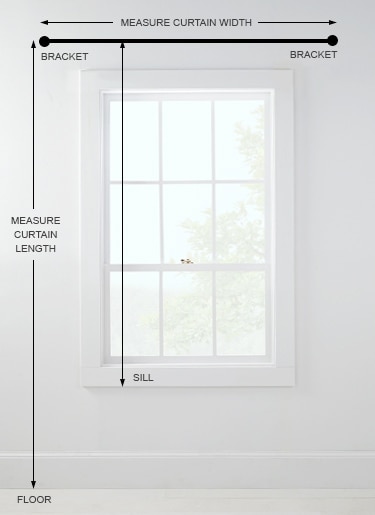
Start measuring from the curtain rod or bracket. Use a metal tape measure for accuracy. Decide the curtain length based on your chosen style. Measure straight down to the floor or desired endpoint. Note the measurement and add extra inches for hems. This ensures a perfect fit and finish.
Select Curtain Rod And Hardware
Selecting the right curtain rod and hardware is key to perfect window curtains. The rod holds the curtains and affects how they hang and look. Choosing the right size and style helps the curtains fit well and match your room’s decor. The hardware also needs to support the curtains’ weight and style.
Rod Width And Placement
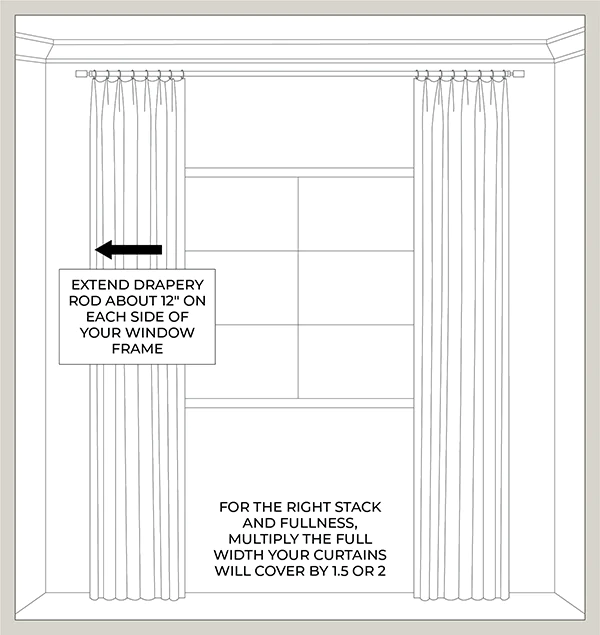
Pick a rod wider than the window frame. This allows curtains to fully open and show the view. Add 4 to 6 inches on each side for better light control. The rod should extend beyond the window by 8 to 12 inches total.
Place the rod high above the window frame. Mounting it 4 to 6 inches above the window top makes the ceiling look taller. This also lets curtains fall gracefully to the floor or sill.
Mounting Options
Choose between inside mount or outside mount rods. Inside mount fits inside the window frame. It gives a clean, modern look but limits curtain width and length.
Outside mount rods install on the wall above the window. They cover the whole window and more. This option hides unattractive window trim and makes windows look larger.
Make sure the brackets and screws are strong. They must hold the rod and curtains without bending or falling.
Credit: www.vermontcountrystore.com
Consider Fabric And Lining
Choosing the right fabric and lining for your curtains changes the way they look and hang. Fabric type affects curtain size and style. Lining adds weight and affects curtain length. Both need careful thought to get the perfect fit.
Fabric Weight And Drape
Heavy fabrics like velvet or wool hang straight and thick. They need more fabric for fullness. Light fabrics like cotton or linen flow softly and move with the air. These need less fabric to look full.
Thick fabrics may require wider curtains for proper coverage. Thin fabrics can be narrower but still look rich and elegant. The weight controls how much the curtain falls and folds.
Effect On Final Curtain Size
Adding lining changes curtain size needs. Lining adds bulk and weight, making curtains heavier. You might need longer curtains to reach the floor perfectly. Lining also protects fabric from sun damage and blocks light.
Consider lining thickness when measuring. Thicker linings add to the overall size. Measure twice to ensure correct curtain length and width. The right lining keeps curtains looking neat and lasting longer.
Adjust For Window Treatments
Adjusting curtain size depends on other window treatments. Curtains should fit well with blinds or shades. This creates a clean, polished look. Proper adjustment improves both style and function.
Blinds And Shades
Measure the window with blinds or shades fully closed. Add extra width to cover the edges of blinds. This prevents light from leaking through. Add 4 to 6 inches on each side for best coverage. For height, measure from the top of the blind to the floor. Add a few extra inches so curtains hang below the blind. This hides the blinds and gives a neat finish.
Layering Curtains
Layering adds depth and style to windows. Use sheer curtains behind heavier ones for softness. Size the outer curtains larger than the inner layer. This creates a full, rich look. Allow extra width to make pleats and folds. Add 6 to 12 inches on each side. For length, make sure the curtains just touch the floor or slightly puddle.
Credit: www.theshadestore.com
Common Mistakes To Avoid
Sizing curtains seems simple but has many hidden errors. These mistakes cause curtains to look odd or not fit well. Avoid these errors to get perfect curtains for your windows.
Incorrect Measurements
Measuring windows wrong is the top error. Measure the width and height carefully. Measure twice to avoid mistakes. Don’t guess sizes. Always use a steel tape for accuracy. Include extra width for curtain fullness.
Ignoring Curtain Style
Each curtain style needs different sizes. Some styles hang straight; others need extra fabric. Forgetting this causes poor fit or look. Know your curtain type before measuring. Styles like pinch pleats or grommet curtains need specific widths and lengths.
Overlooking Hardware Dimensions
Rod and brackets affect curtain size. Curtains should cover the rod fully. Measure rod length plus space for brackets. Don’t use window frame size alone. Consider how far the rod sticks out for curtain length. Hardware size can change curtain width and height.

Credit: twopagescurtains.com
Frequently Asked Questions
How Do I Measure Window Width For Curtains?
Measure the exact width of your window frame. Add extra inches for curtain fullness and rod overlap. Typically, multiply window width by 1. 5 to 3 for the best look.
What Is The Ideal Curtain Length For Windows?
Curtains should either just touch the floor or puddle slightly. Measure from the curtain rod to the floor. This ensures a neat and elegant appearance.
How Much Curtain Fullness Do I Need?
Fullness depends on fabric type and style preference. Generally, 2 to 2. 5 times the window width creates a rich, full look. Thinner fabrics may require more fullness.
Where Should I Mount The Curtain Rod?
Mount the rod 4 to 6 inches above the window frame. Extend it 3 to 6 inches beyond each side. This makes windows appear larger and allows more light.
Conclusion
Choosing the right curtain size makes your windows look great. Measure carefully for width and length. Add extra width for fullness and style. Think about curtain rods and how high to hang. This helps your room feel bigger and brighter.
Properly sized curtains also block light and add privacy. Take your time to get measurements right. The right curtains complete your room’s look perfectly. Simple steps lead to beautiful, well-fitted curtains every time.
As an Amazon Associate, I earn from qualifying purchases.